 |
|
|
|
 |
|||
 |
|||
 |
 |
 |
 |
 |
|
||
 |
|
||
 |
|
||
 |
|
||
 |
|
||
 |
|
||
 |
|
||
 |
|
||
 |
|
||
 |
|
||
 |
|
||
|
|
|
|
|
|||
|
|||
|
|
|
|
|
|
||
|
|
||
|
|
||
|
|
||
|
|
||
|
|
||
|
|
||
|
|
||
|
|
||
|
|
||
|
|
||

by Patricia M. Lee
 ne of the most fascinating
places on our cruise of the Mediterranean was Tunisia. Considered one of the
jewels of the area, it is located on the extreme northern coast of Africa
where the capital city of Tunis was our port of call. Its historical past
began when the Phoenicians settled the first colony in 1200 B.C. Its strategic
site meant it was pillaged, fought over and colonized regularly by many different
cultures.
ne of the most fascinating
places on our cruise of the Mediterranean was Tunisia. Considered one of the
jewels of the area, it is located on the extreme northern coast of Africa
where the capital city of Tunis was our port of call. Its historical past
began when the Phoenicians settled the first colony in 1200 B.C. Its strategic
site meant it was pillaged, fought over and colonized regularly by many different
cultures.
Our tour of Tunis began with a visit to the old Medina where we strolled through maze-like streets.
Our tour of Tunis began with a visit to the old Medina where we strolled through maze-like streets (we would never have navigated them without a guide) and admired the monuments and exquisite exterior architecture. Next, we gazed in awe at The Great Mosque Djammaa Ez-Zitouna (Olive Tree) built in the 8th century when Muslims arrived from Egypt. It is Tunisia’s largest and most revered mosque and became the center of the old city. The surrounding columns are from Carthage.
We delighted in the nearby Souk Al Attarine (the perfume souk). According to custom, each perfume relates to a special event or ceremony. Visitors can mix fragrant oils and create their own favorite combinations. Limited time prevented us from mixing oils but I did purchase a very delicate perfume bottle that conjures up memories of Tunis. Across from the souk is the Musée Dar Ben Abdallah Palace, an elegant museum depicting Tunisian life in the 19th century, including colorful costumes and collections of implements of the time.
Last on our tour was a visit to the Bardo National Museum. An antique palace surrounded by beautiful gardens, it is a work of art in itself. The building, over one hundred years old, offers historical and archeological objects relating to the history of Tunisia from prehistoric times to the 19th century. Fifty rooms and galleries contain objects and collections from the Phoenicians, Greeks, Romans, French and many others who became part of the diversity of this country. Inside the prehistoric Antiquities Section is a monument that is perhaps one of mankind’s first spiritual and cultural structures. Named Hermaion of El Guettar, it is made of a heaped pile of pebbles, balls of flint and bones. It sits above a stairway where it can be easily seen.
The museum contains such a vast display of mosaics in every form that it is impossible to view everything. The Roman section was very enticing. Of particular interest, although not in mosaics, was the painted wooden ceiling of the old palace with its very detailed, colorful design. Tunisia’s wealth of history also includes pirates raiding the coast, the German occupation during WWII, rescue by the U.S. Navy and being colonized by the French. Tunisia gained independence from France in 1957. Fond memories of a beautiful and friendly cosmopolitan city linger.
Tunisia National Tourism Office: www.tourismtunisia.com.
Return to: Recent articles, Top, Home.
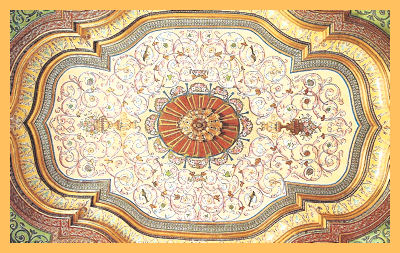
Painted
Ceiling, Old Palace Bardo Museum
Bardo
Museum photo
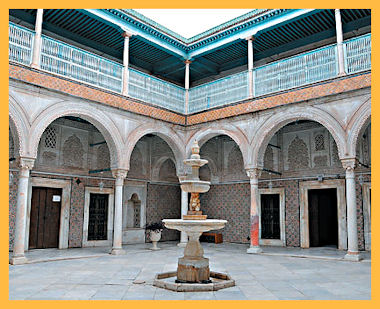 Courtyard of Dar Ben Abdulla Museum
Leandro Neumann Ciuffo photo